Industries · Glass
High Emissivity Coatings for Glass Manufacturing
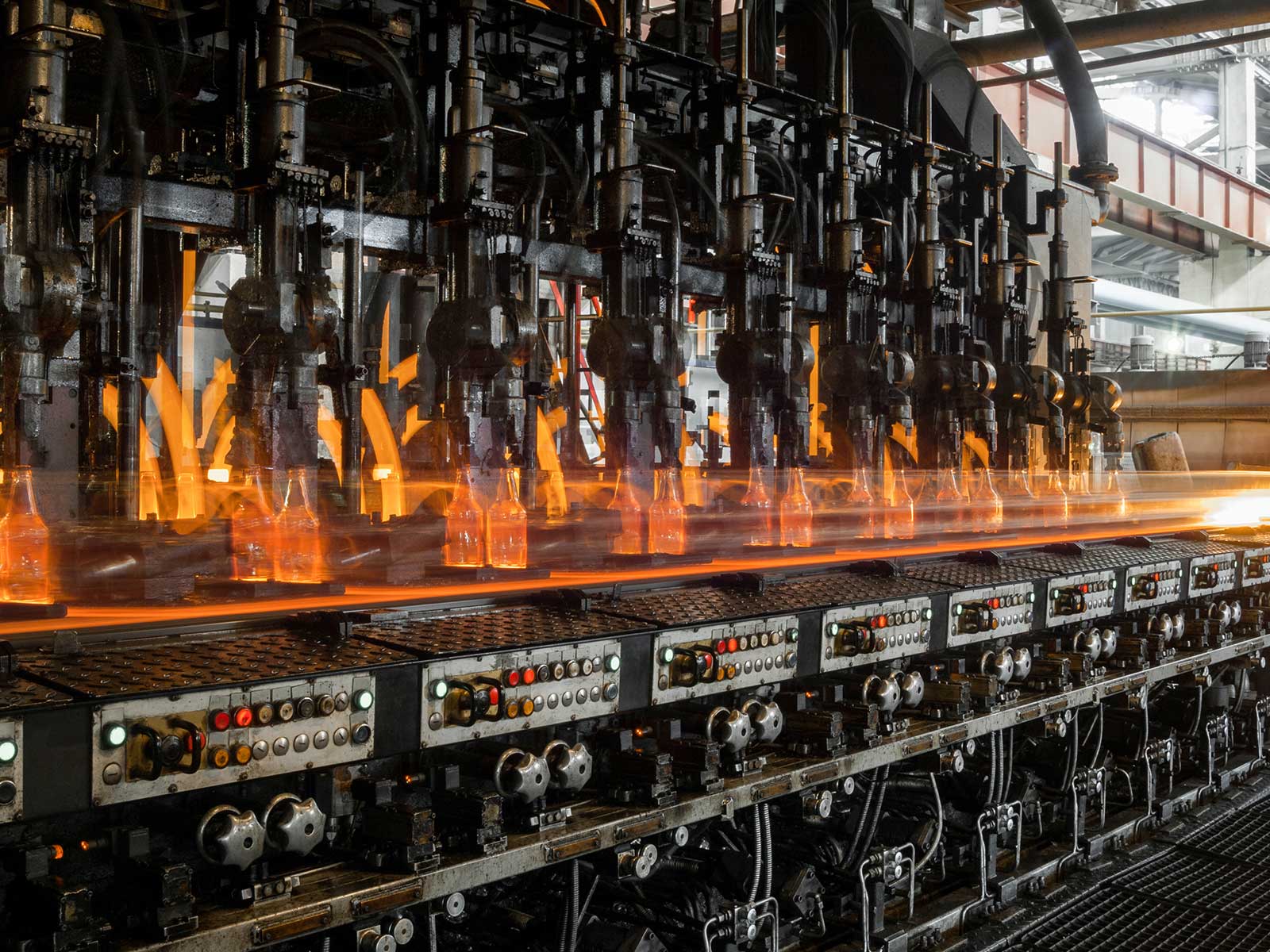
In glass melting, radiant transfer governs: the crown's function is to drive heat into the melt, and every point of lost emissivity is fuel wasted above the batch line. Emisshield raises crown and superstructure surfaces to 0.85 to 0.95 emissivity and holds it at glass temperatures, with a documented 5% energy saving sustained for more than 36 months and ROI inside three months on a wool fiberglass furnace. Emisshield serves 130+ container, float, and fiberglass plants worldwide.
- 5% energy, 36+ months, ROI 3 months
- Melting furnace crown and superstructure · Wool fiberglass plant
01 · Applications
/ 01
What problems does a high emissivity coating solve in a glass furnace?
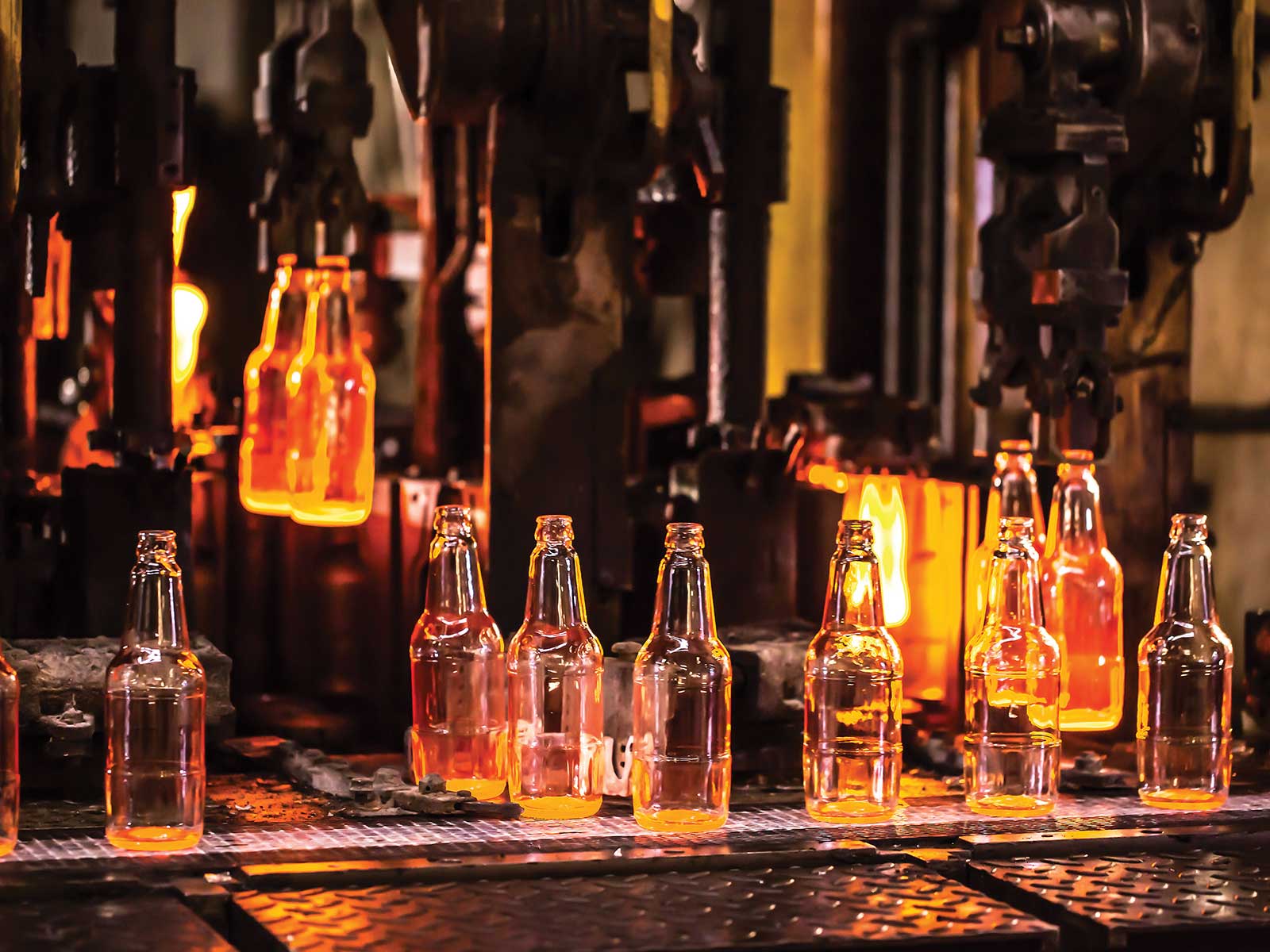
Specific energy creeps up through the campaign. Crown hot spots wear refractory and drive chrome loss. Temperature instability shows up as defects in the gob. NOx rises with firing rate. The coating converts the crown from a reflector into a re-radiator aimed at the melt, so the same pull rate needs less fuel, the crown runs cooler and more uniformly, and the refractory surface is sealed against batch carryover and alkali attack.
/ 02
How does Emisshield perform on the melting furnace crown?
On a wool fiberglass furnace operating above 1,600°C with chrome-alumina crown and superstructure refractory, the coating delivered 5% energy savings with no deterioration over 36+ months, ROI within three months on energy alone, more uniform temperature distribution, cooler refractory with lower chrome loss, thermal shock protection, and reduced NOx.
Documented in

/ 03
Which other glass furnace areas can be coated?
Regenerators and checkers, ports and port necks, and forehearths and distributors are all radiant-dominated surfaces where the same mechanism applies. Formulations for glass service are engineered for superstructure atmospheres. Application windows and expected results for these areas come from an assessment of the specific furnace.
02
Documented results
| Asset | Case study | Result |
|---|---|---|
| Melting furnace crown and superstructure | Wool fiberglass plant | 5% energy, 36+ months, ROI 3 months |
FAQ
Frequently Asked Questions
- Can the crown be coated mid-campaign?
- Application is typically done at rebuild or during a planned cold repair; Emisshield engineering advises on windows per furnace condition.
- Does the coating survive alkali vapor?
- Formulations for glass service are engineered for superstructure atmospheres; the documented 36+ month crown result is under production conditions above 1,600°C.
- Will it change my glass chemistry?
- No. The ceramic coating is inert in service and bonded to the refractory at 2 to 4 mils.
- How much energy will my furnace save?
- The documented crown case saved 5%. Furnace-specific projections come from an assessment of your campaign data.
Next Step