Industries · Iron & Steel
High Emissivity Coatings for Iron, Steel & Aluminium
Steel and aluminium production runs on radiant heat and loses it to low-emissivity walls, scale, and worn linings, while ladles, EAF components, tubes, and rolls are consumed by slag, thermal shock, and oxidation. Emisshield high emissivity coatings raise lining and component surfaces to 0.85 to 0.95 emissivity, with documented results including ladle life doubled from 20,000 to 40,000 pours, EAF roof life up 88%, delta life up 115%, and a quench furnace gaining 16.6% production on 10.7% less fuel. ROI is typically under a year.
- 20,000 to 40,000 pours
- Auto-pour ladles · Redline Industries
- 110 to 160 tons; up to 75% life gain
- Grey-iron ladles · Confidential foundry
- 500 to 940 heats; ROI <6 months
- Water-cooled EAF roof · Confidential mill, USA
01 · Applications
/ 01
What problems does a high emissivity coating solve in a steel or aluminium plant?
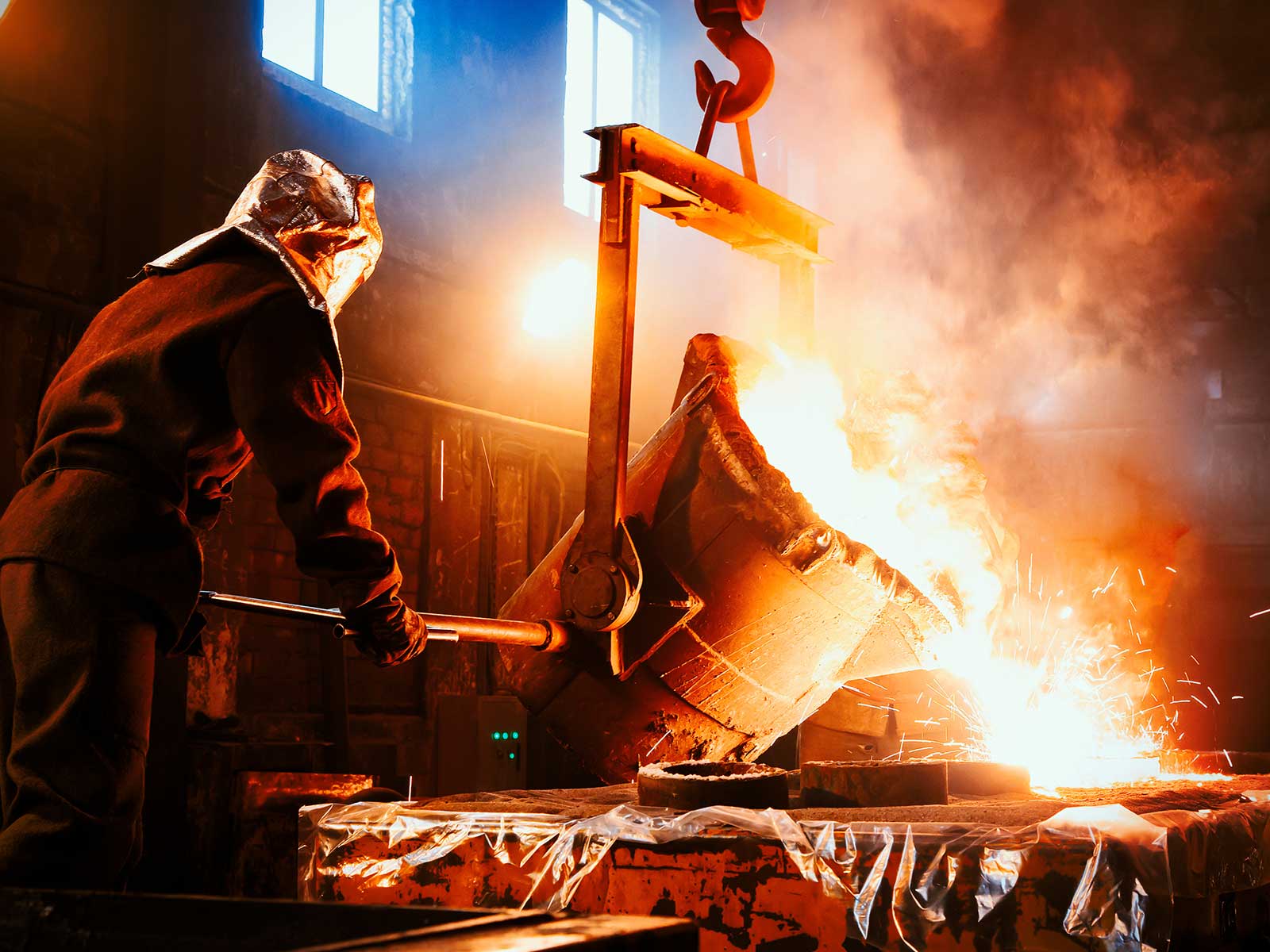
Slow heat-up and uneven temperature across the load lengthen cycles. Ladle and delta refractory is consumed by slag adhesion and thermal-shock cracking. Water-cooled roofs leak and crack. Radiant tubes develop hot spots and oxidize early. Rolls pick up scale. Structural steel near exhaust flame warps. Fuel and CO2 per ton stay above target. The coating addresses each through the same mechanism: it absorbs radiant energy and re-radiates it into the load or away from the component, so surfaces run cooler and more uniformly and stop wetting slag.
/ 02
How does Emisshield perform on ladles and transfer vessels?
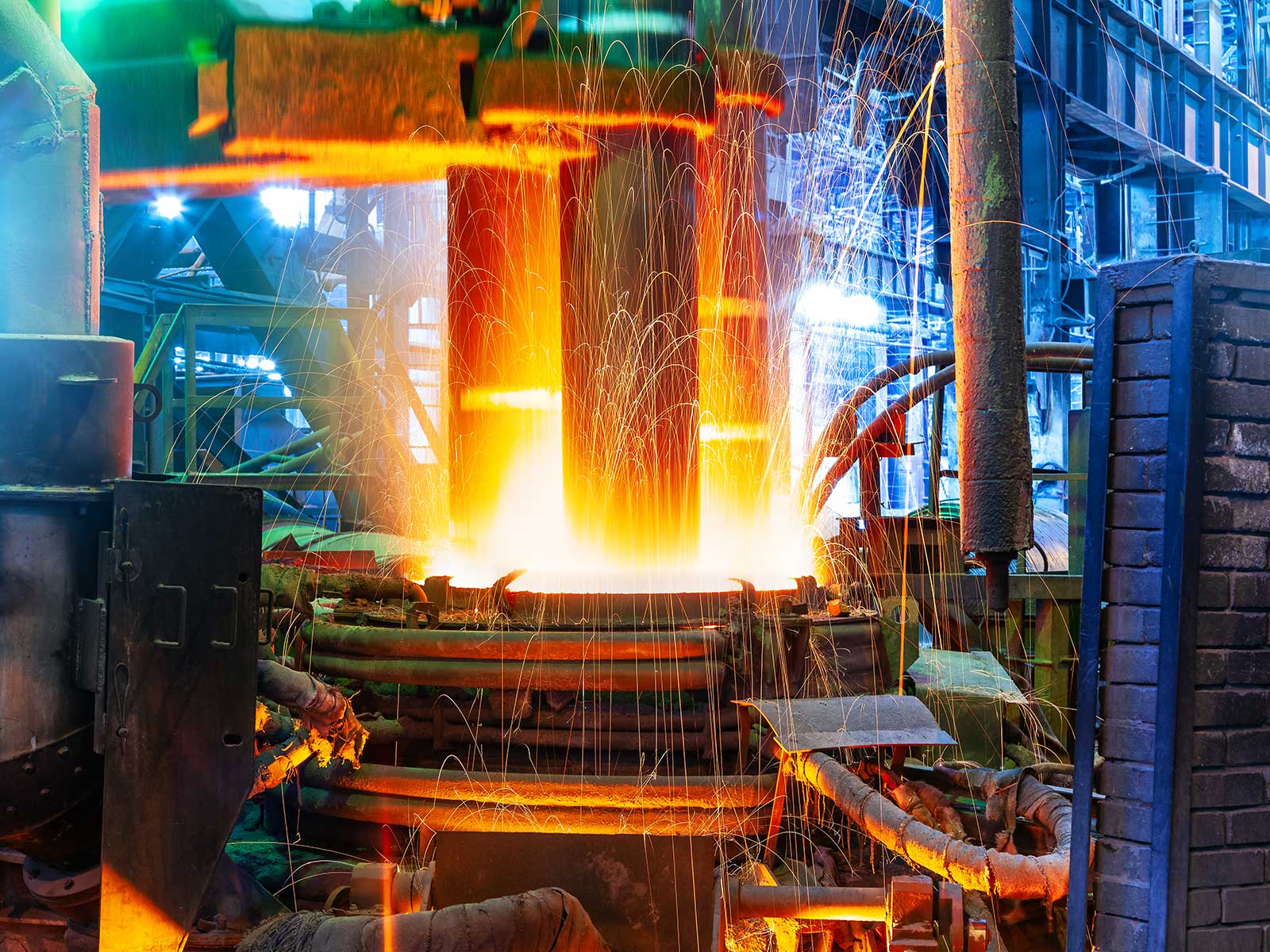
At Redline Industries, stainless auto-pour ladles for aluminium casting that wore out after about 20,000 pours were grit-blasted and coated with STG-1 across the full lining, dam, and pour spout. Coated ladles reached 40,000 pours before repair, with much less slag adhesion, chemical corrosion, and thermal-shock cracking. In a grey-iron foundry, pre-cast ladles went from 110 to 160 tons poured before removal, and later coatings delivered 75% life gains, with the dam staying unobstructed and casting quality improving.
Documented in
/ 03
How does Emisshield perform on EAF roofs and deltas?
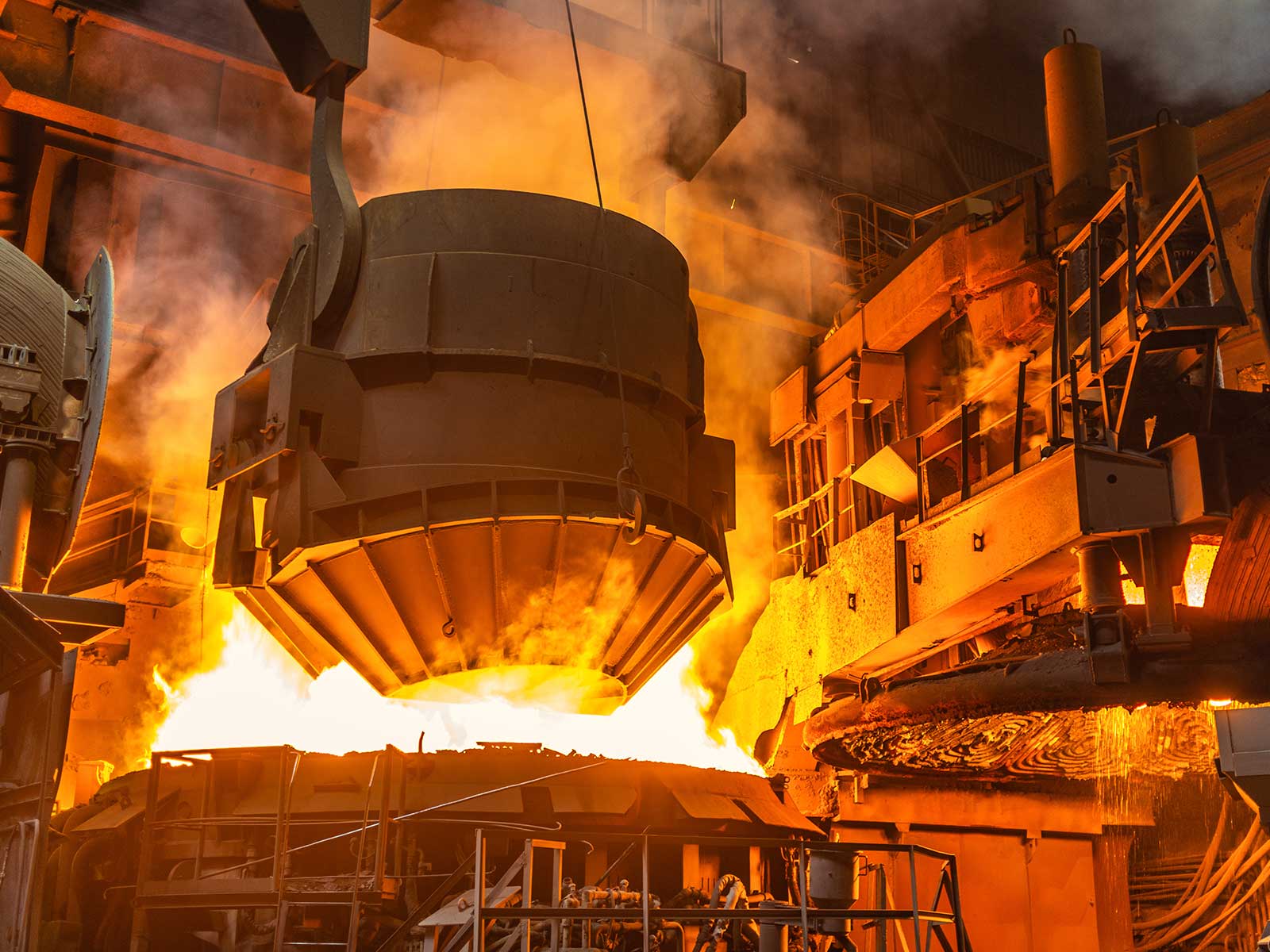
A water-cooled EAF roof at a US mill that lasted about 500 heats and needed two $25,000 leak repairs per campaign was coated with M-2. It ran 940 heats with no water leaks, saving more than $100,000 in repairs, and arc time per melt fell by 3 minutes, worth $94,000 in electricity, with ROI inside six months. Precast ultra-low-cement deltas at an integrated plant, cracking at 40 heats and reaching only 80 with an upgraded castable, were coated with ST-2 on the hot face and electrode ports and averaged 172 heats, a 115% gain, because the coating shielded the surface through initial heats and let the castable sinter properly.
Documented in
/ 04
How does Emisshield perform on arc furnaces?
Eastman Kodak's precious-metals recovery arc furnace showed hot and cold spots up to 320°C and shell cracks within 1.5 weeks. With the refractory coated and the furnace run at 1,320°C, the exterior held uniform at 150°C over three weeks with no cracking, and the load heated more evenly, improving recovery and process control.
Documented in
/ 05
How does Emisshield perform on aluminium melting and holding furnaces?
At India's largest aluminium producer, one of two identical 60-ton gas-fired melting-holding furnaces was coated on its thirty-year-old monolithic lining. A third-party comparison against the uncoated furnace measured 12°C higher melt temperature, 545 more tonnes a month (about $1.2M in added revenue), and 10% less dross despite the higher output. A separate third-party audit at a confidential aluminium producer over six months of production data found roughly 9% less dross, higher melt temperature despite a heavier charge, and $645,000 more casting output over four months.
Documented in
/ 06
How does Emisshield perform on radiant tubes?
At a Swedish integrated mill, a chrome-nickel radiant tube with 500°C exit-gas temperature, hot spots, and premature oxidation was coated externally and sintered before installation. Exit-gas temperature fell to 430°C, indicating more heat transferred to the steel, hot spots and oxidation diminished, and tube life is projected 3 to 5 times longer.
Documented in
/ 07
How does Emisshield perform on rolls, tools, and structural steel?
Plate heat-treating rolls in an austenitizing furnace, built with partner Duraloy, eliminated scale pickup after coating. Steel skimmers and sampling tools at an Ohio zinc refinery, which dissolved in molten zinc and contaminated the bath, were coated with M-1 and sintered; they now resist dissolution and the bath no longer needs re-refining. The steel support structure of a shaft furnace in Minerva, Ohio, warping under exhaust flame impingement at ~982°C, was coated with M-2 and has stayed in service without sagging, with no structural redesign.
Documented in
/ 08
How does Emisshield perform on quench and heat-treatment furnaces?
Seoul Shot Industry's gas-fired shot-ball quenching furnace, running at 1,000 to 1,010°C with an 8% fuel-saving target, was coated on the shot tube, ceramic fiber, and hard-refractory walls with M-2, ST-17, and ST-3. Fuel fell 10.7%, heat-up dropped from 4h56 to 2h43, and production rose 16.6%.
Documented in
02
Documented results
| Asset | Case study | Result |
|---|---|---|
| Auto-pour ladles | Redline Industries | 20,000 to 40,000 pours |
| Grey-iron ladles | Confidential foundry | 110 to 160 tons; up to 75% life gain |
| Water-cooled EAF roof | Confidential mill, USA | 500 to 940 heats; ROI <6 months |
| Precast EAF deltas | Integrated steel plant | 80 to 172 heats, +115% |
| Arc furnace | Eastman Kodak | Uniform 150°C shell, no cracking |
| Melting-holding furnace | India's largest aluminium producer | +545 t/month, dross down 10% |
| Aluminium furnace | Third-party audit | ~9% less dross, $645,000 more output |
| Shot-ball quench furnace | Seoul Shot | 10.7% fuel, +16.6% production |
| Heat-treating rolls | With Duraloy | Scale pickup eliminated |
| Molten-zinc tools | Ohio zinc refinery | Contamination eliminated |
| Structural steel | Minerva, Ohio | No warping, no redesign |
03 · Case Studies
Iron & Steel case studies
- Plate heat-treating furnace rollsScale pickup eliminatedFurnace Roll High Emissivity Coating: Scale Pickup Eliminated on Duraloy Plate Heat-Treating Rolls
- Precious-metals recovery arc furnace (9 ft diameter, 12 ft long)Uniform 150°C exteriorArc Furnace High Emissivity Coating: Hot Spots and Shell Cracking Eliminated at Eastman Kodak
- Pre-cast refractory ladles110 to 160 tons pouredGrey-Iron Ladle High Emissivity Coating: 45 to 75% Longer Ladle Life
- 60-ton natural-gas melting-holding furnace+545 t/monthAluminium Melting Furnace High Emissivity Coating: 545 Tonnes More per Month at India's Largest Aluminium Producer
- Shaft furnace steel support structureService-life extensionStructural Steel High Emissivity Coating: Shaft Furnace Support Stops Warping at Minerva
- Radiant tube (Kanthal chrome-nickel)Exit gas 500 to 430°CRadiant Tube High Emissivity Coating: Exit-Gas Temperature Down 70°C at Oxelösund
- Pre-cast electric-arc furnace deltas172 heats averageEAF Delta High Emissivity Coating: Service Life Up 115% at an Integrated Steel Plant
- Auto-pour ladles (stainless, aluminium casting)200% life increaseAuto-Pour Ladle High Emissivity Coating: Service Life Doubled at Redline Industries
- Steel shot air-quenching furnace−10.7% fuelQuench Furnace High Emissivity Coating: 10.7% Fuel Savings and 16.6% More Production at Seoul Shot
- Melting-holding furnaceThird-party audit, six months of production dataAluminium Furnace High Emissivity Coating: Third-Party Audit Confirms 9% Less Dross and $645,000 More Output
- Water-cooled electric-arc furnace roof500 to 940 heats (+88%)Water-Cooled EAF Roof High Emissivity Coating: 940 Heats and No Leaks at a US Steel Mill
- Steel skimmers, sampling tools, dross-removal implementsExtended tool lifeMolten Zinc Tool High Emissivity Coating: Bath Contamination Eliminated at an Ohio Zinc Refinery
FAQ
Frequently Asked Questions
- Does it work on water-cooled EAF roofs?
- Yes. A coated water-cooled roof ran 940 heats against 500 uncoated with no water leaks, and coated precast deltas more than doubled their life.
- What about aluminium's lower temperatures?
- Radiant transfer still dominates melting and holding. Two third-party comparisons on aluminium furnaces measured higher melt temperature, more monthly output, and about 9 to 10% less dross.
- Can rolls, tubes, and tools be coated off-line?
- Yes. Metal components are coated and, where required, sintered at Emisshield's facility or a certified partner before installation, or factory pre-coated through the OEM program.
- How much fuel will a reheat or annealing furnace save?
- Documented reheat and annealing results are being finalized for publication. Fired-furnace results elsewhere on this site run 4 to 12%. Energy Savings
Next Step