

Next Generation Coatings
EmisshieldThe Next Generation of High Emissivity Coatings
Emisshield high emissivity coatings improve radiant heat transfer in industrial thermal processes, reducing fuel consumption, increasing production, and extending equipment life. NASA-derived, third-party validated, proven in 500+ facilities. The only high emissivity coating in the Space Technology Hall of Fame.
01 · The Technology
Applied as a Coating. Performs as a Composite Material.
Emisshield is a family of high emissivity ceramic coatings, developed at NASA’s Ames Research Center for the X-33 and X-34 space vehicle programs and licensed exclusively to Emisshield, Inc. in 2001.
It is not an insulator. It absorbs radiant and convective energy and re-radiates it directly to the cooler product load, so heat that would escape up the stack does work instead.
02 · Products
One Technology. A Coating Engineered for Every Substrate.
Metal · Refractory · Ceramic Fiber · Burner Blocks · Ladles · Flare Tips · Crematories
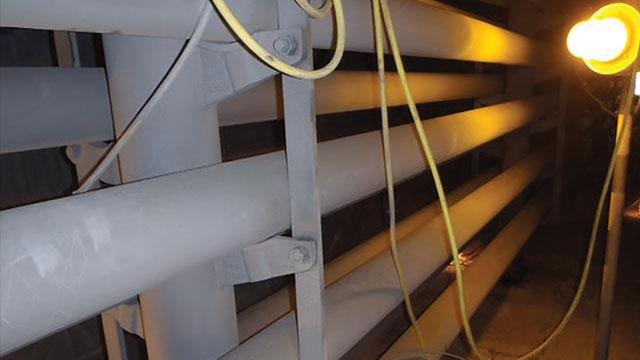
Metal surfaces
Radiant Tubes, Rolls, Panels, and Structural Steel
Turns oxidized metal at ~0.6 emissivity into a stable re-radiator of at least 0.96 (M-6) that runs cooler and more evenly, with tube-wall temperatures 40 to 70°C lower in documented service.
- Radiant tubes
- Process tubes
- Furnace rolls
- Water-cooled panels
- Structural steel
03 · How Emissivity Works
Absorb. Re-radiate. Perform.
Radiant energy from the heat source is absorbed into the Emisshield composite surface instead of soaking into the wall, then re-emitted onto the load. Re-radiated, not reflected: the same firing rate delivers more usable heat.
/ 01
Absorb
Radiant energy is taken into the composite surface instead of soaking into the wall. The coating becomes part of the surface itself.
/ 02
Re-radiate
The surface re-emits that energy onto the load. Re-radiated, not reflected, so heat returns to the product and process.
/ 03
Perform
Same firing rate, more usable heat: less fuel, more production, documented in service.

04 · Industries
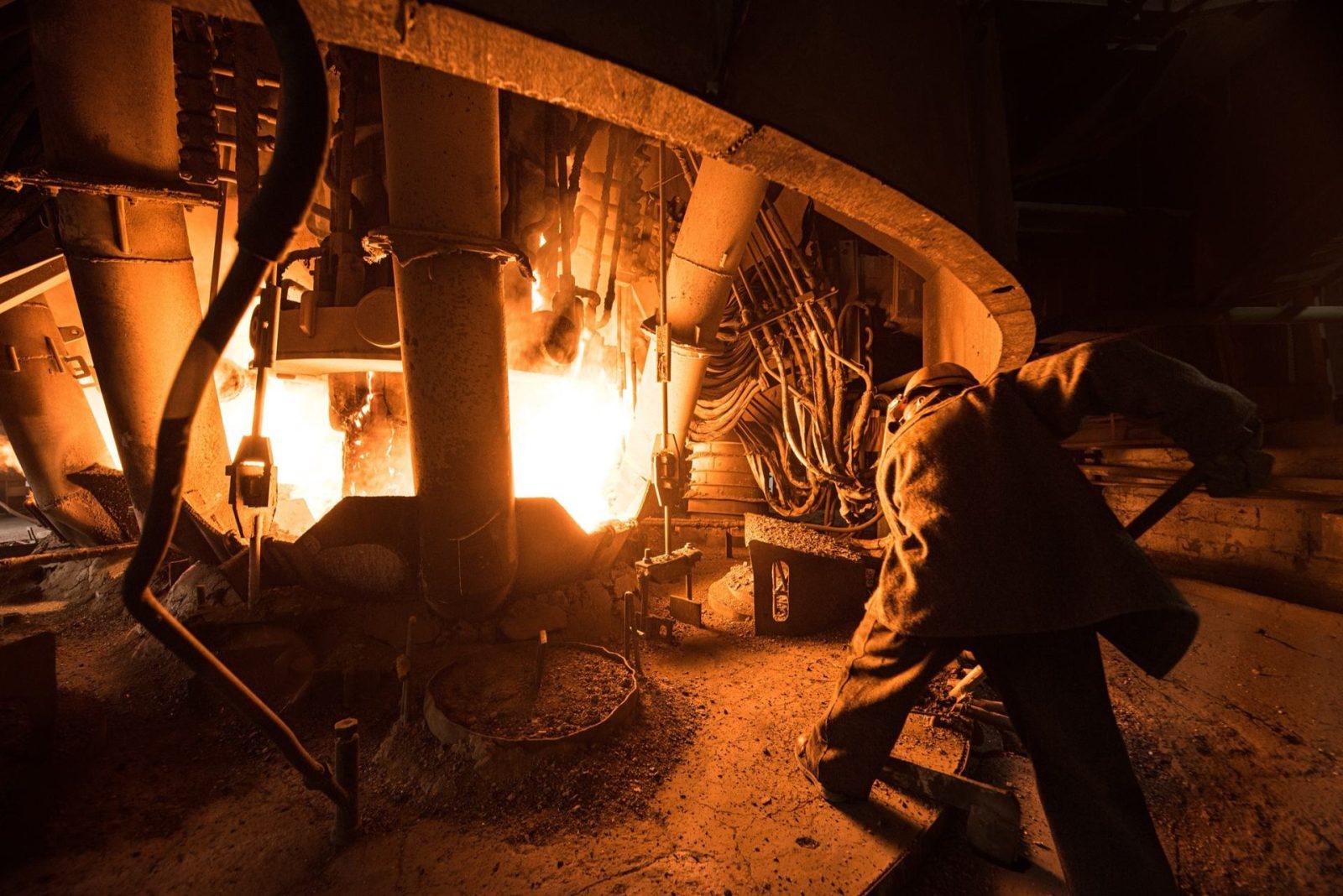
Proven Across Heat-Intensive Industries.
Iron & Steel
Faster heat-up and lower fuel burn in reheat and annealing.
Hydrocarbon & Chemical
More uniform tube-wall temperatures in fired heaters.
Glass
Stable crown temperatures and reduced specific energy.
Power Generation
Higher radiant absorption on boiler waterwalls.
Kilns
Shorter heat-up cycles and steadier zone control.
Ethanol
More efficient firing in dryers and thermal oxidizers.
Crematories
Faster cycles and lower fuel use with Emisshield ST-3(M).
Parts & OEMs
Higher-performing components and equipment.
Space & Aerospace
Thermal protection born on NASA launch vehicles.
05 · Performance
The Performance Behind the Coating.
01 · Reach
1000+
facilities
Coated and working worldwide.
02 · Fuel
Up to 15%
fuel savings
Documented in service; audited cases at 5%, 8%, and 12%.
03 · Capacity
5–15%
production gains
Throughput gains recorded across industries.
04 · Payback
Under a year
typical ROI
Documented across fuel savings, production gains, and longer component life.

06 · Quality & Certifications
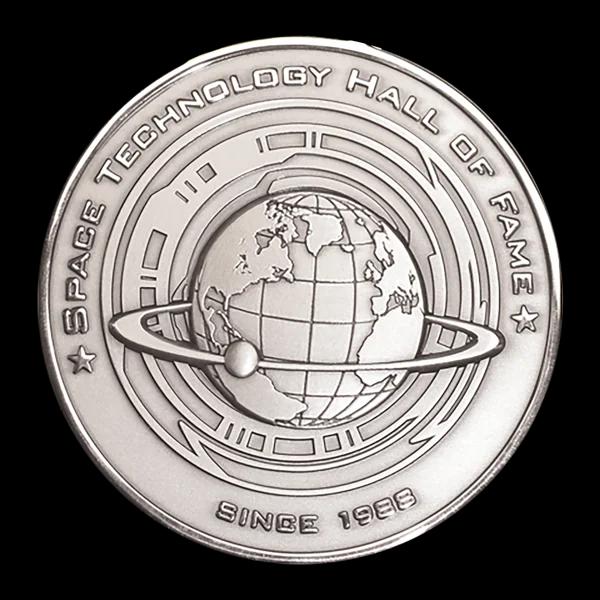
The Only High Emissivity Coating in the Space Technology Hall of Fame.
Hall of Fame induction is NASA-community verification that the technology transfer is real, the science is sound, and the commercial results are documented.
The Space Technology Hall of Fame is the Space Foundation's recognition for space technologies successfully transformed into products that improve life on Earth. Emisshield was inducted in 2021, and Dr. John Olver became the program's 85th individual inductee.

- 2021
- Inducted36th Space Symposium, Colorado Springs
- 85th
- Individual inducteeDr. John Olver, President and CEO
- 2001
- Exclusive NASA licenseDeveloped at NASA Ames Research Center
- 40+
- Industrial formulationsEngineered since the 2001 license

07 · Distributors
Global Reach. Local Expertise.
18 certified partners sell, apply, and support Emisshield across the globe. Hover a region or a logo to see who covers it.

- United States · Canada · Mexico

- Multiple regions

- Trinidad & Tobago

- Paulo LeiteBrazil
- Europe

- Türkiye · Azerbaijan

- Qatar

- UAE

- UGICON + RamsisSaudi Arabia
- Tech Mech ServicesOman
- South and Central Africa

- India

- INTAJMalaysia
- China · Mongolia

- ESNTChina
- South Korea

- South Korea

- Multiple Locations Worldwide

08 · Case Studies
See the Proof. One Documented Result per Industry.
The challenge, the coating applied, and the measured result, from the plant’s own baseline. The full library holds every documented study.
Hydrocarbon & Chemical
12% fuel savings
Ethylene Cracker High Emissivity Coating: 12% Fuel Savings at Huntsman
Huntsman Chemical, Texas, USA
Iron & Steel
200% life increase
Auto-Pour Ladle High Emissivity Coating: Service Life Doubled at Redline Industries
Redline Industries, USA
Glass
5% energy savings
Glass Furnace Crown High Emissivity Coating: 5% Energy Savings Sustained 36+ Months
Wool fiberglass plant
Power Generation
−4 to 5% natural gas
Process Boiler High Emissivity Coating: 15 to 20% More Steam on 4 to 5% Less Gas at Apache Nitrogen
Apache Nitrogen Products, USA
Ethanol
Gas yield +7.6% (system)
DDGS Rotary Dryer High Emissivity Coating: 7% Better Gas Yield and 5-Month ROI at a Midwest Ethanol Plant
Midwest ethanol plant
Crematories
21% energy savings
Crematory High Emissivity Coating: 21% Energy Savings with Cremkote
Cremation facility
Common Questions
Frequently Asked Questions.
What is a high emissivity coating?
A thin ceramic coating engineered to raise a surface's emissivity close to black-body behavior of at least 0.96 (M-6) and keep it there at extreme temperature, so the surfaces of heaters, boilers, kilns, and vessels re-radiate heat into the product instead of losing it.
How much fuel can a high emissivity coating save?
Documented Emisshield results range up to 15% depending on asset, fuel, and baseline condition, with specific audited cases at 5%, 8%, and 12%.
Is Emisshield an insulator?
No. Insulation resists heat flow. Emisshield redirects it, absorbing radiant and convective energy at the hot face and re-radiating it to the cooler product load. The two work together.
What temperatures can Emisshield withstand?
Emissivity holds constant to 1,700°C, with thermal shock tolerance from -236°C to 1,500°C in 3 seconds without failure.
Losing Heat in Your Thermal Process?
Send us the asset, the fuel data, and the target. Our engineers project the savings from documented results on comparable installations.