Industries · Kilns
High Emissivity Coatings for Industrial Kilns
Kiln economics are set by cycle time and fuel per fired unit. Emisshield high emissivity coatings raise kiln lining emissivity to 0.85 to 0.95 so burner energy is re-radiated into the ware instead of the exhaust, with efficiency gains of 8 to 10% on continuous kilns and up to 15% on intermittent kilns across Emisshield's kiln installations, plus shorter heat-up and steadier zone control. ROI is typically under a year.
01 · Applications
/ 01
What problems does a high emissivity coating solve in a kiln?
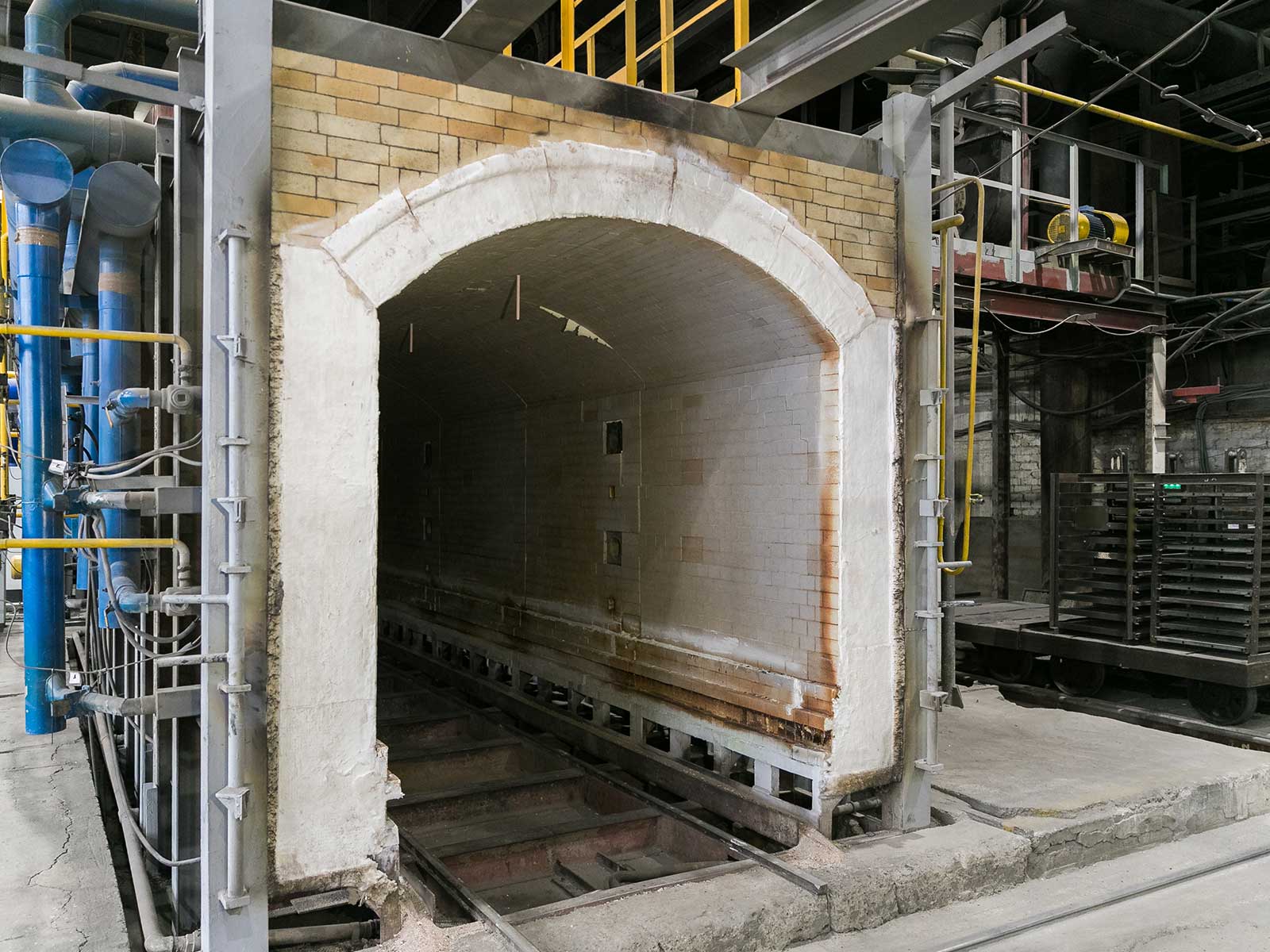
Long heat-up eats schedule. Uneven zone temperatures produce inconsistent ware. Fuel per fired ton sits above budget. Afterburners burn fuel to hold compliance temperature. Linings wear from cycling. The coating lets zones reach setpoint faster and hold with less firing, fires the setting more evenly, and in cyclic service protects the lining through every heat-up and cool-down with thermal-shock tolerance from -392°F to 2,732°F in 3 seconds.
/ 02
How does Emisshield perform on continuous tunnel kilns?
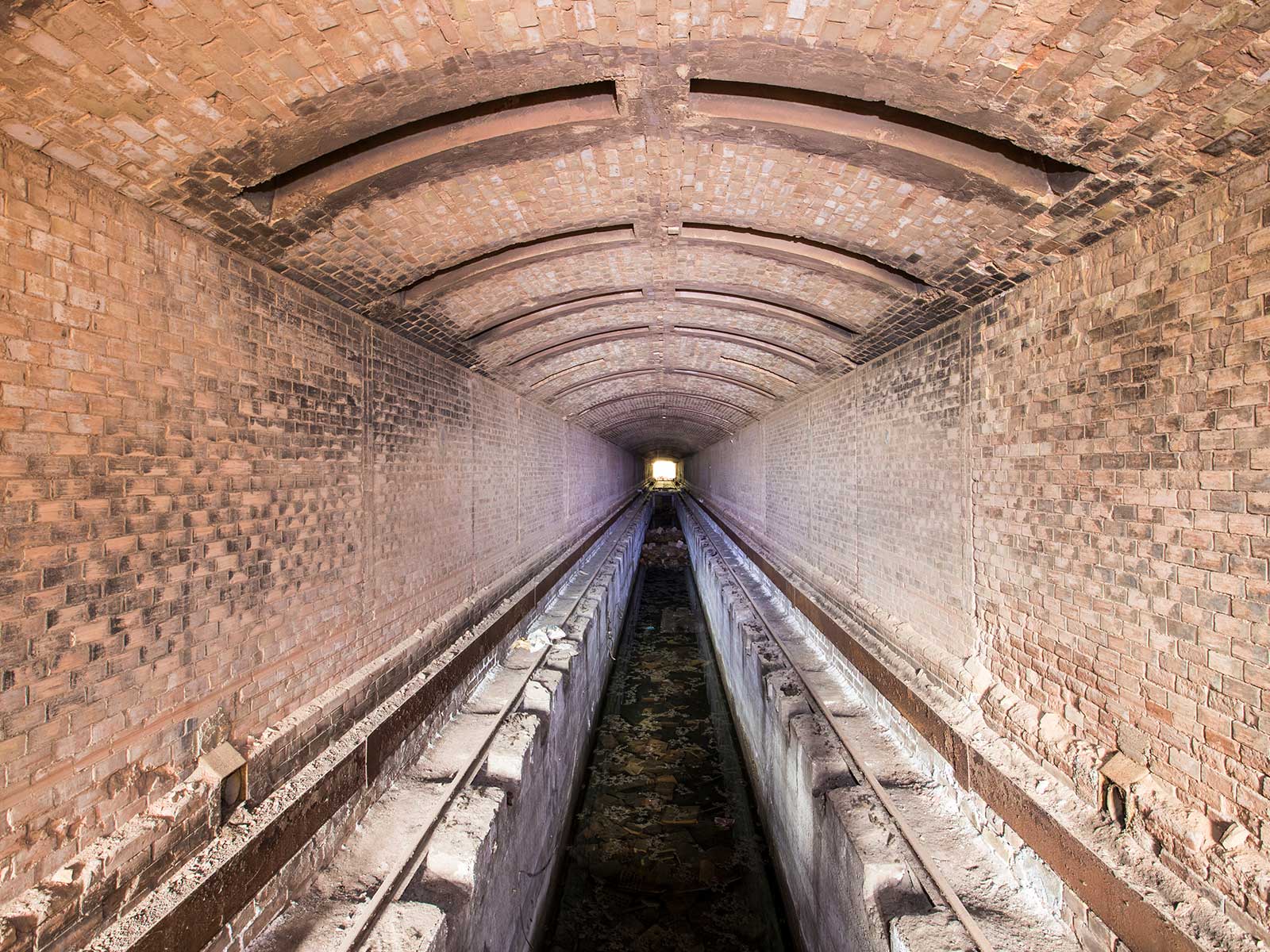
On continuous kilns, Emisshield installations show 8 to 10% efficiency improvement. Coating can be limited to the zones where the economics are strongest, typically the firing and soak zones, since radiant share rises with temperature. The coated lining re-emits energy into the ware across the setting width, which reduces the temperature gradient between the kiln car load's outer and inner ware.
/ 03
How does Emisshield perform on intermittent and batch kilns?
Intermittent kilns gain the most, up to 15%, because every cycle includes a heat-up from cold and the coated lining shortens that heat-up while protecting the refractory through the cycle. Afterburners hold compliance temperature with less supplemental firing when the chamber surfaces re-radiate rather than reflect.
/ 04
Can rotary cement and lime kilns be coated?
Yes. Formulations bond to the refractory at more than 5,000 PSI and tolerate the mechanical and thermal cycling of rotation. Results are projected per kiln from the assessment data.
/ 05
What does independent research say?
Clemson University conducted an instrumented pilot-scale kiln study of coating impact on energy and cycle behavior. Emisshield's kiln applications are also informed by the third-party ceramic fiber testing (shrinkage under 1%, continuous-duty limit ~150°C higher) that applies to fiber-lined kilns.
Documented in
FAQ
Frequently Asked Questions
- Which kilns benefit most?
- Any kiln where radiation dominates: ceramics, brick, cement, and lime all qualify. The higher the temperature, the larger the radiant share.
- Can just the soak zone be coated?
- Yes. Zones can be coated selectively where the economics are strongest.
- What about rotary kilns' moving lining?
- Formulations bond at 5,000+ PSI and tolerate rotation; cement and lime applications are established.
- How fast is payback?
- Kiln results in the 8 to 15% range typically pay back inside a year; the fuel bill sets the exact figure.
Next Step