Technology
High Emissivity Coating Technology
Emisshield is a high emissivity ceramic coating technology developed at NASA's Ames Research Center and licensed exclusively to Emisshield, Inc. in 2001. Applied at 2 to 4 mils to the hot face of a thermal asset, it raises surface emissivity to 0.85 to 0.95 and holds that value to 3,100°F (1,700°C), so radiant energy that would leave with the flue gas is redirected into the product. Documented across 500+ facilities: up to 15% fuel savings, 5 to 15% production gains, longer component life, and ROI typically under a year.
01
What is in this section?
- / 01How Emissivity WorksThe physics, explained for engineers and managers alike. Why a 50 to 100 micron layer changes the energy balance of a heater, boiler, kiln, or ladle.
- / 02Products / CoatingsCoating families for metal, refractory, and ceramic fiber substrates. Specifications, application, and the products named in the case studies.
- / 03Research & InnovationNASA origins, the Ghent University IMPROOF pilot, third-party testing, and continuous formulation R&D.
- / 04Energy SavingsEvery documented fuel and energy result, by industry and asset, with the mechanism behind it.
- / 05Production IncreaseThroughput, run length, and heat-up time results, and how combustion stability produces them.
Documented
- 500+
- Facilities coated worldwide
- Up to 15%
- Fuel savings
- 5 to 15%
- Production gains
- Under a year
- ROI, typically
02
How does a 2 to 4 mil coating change thermal performance?
Above roughly 1,000°F, radiation is the dominant mode of heat transfer in fired equipment, and radiation is governed by the surface, not the mass behind it. Changing the top 50 to 100 microns of a wall, tube, or lining changes how the entire enclosure exchanges energy. That is why a thin coating produces double-digit fuel effects while insulation, which acts on conduction, does not.
What makes Emisshield a third-generation high emissivity coating?
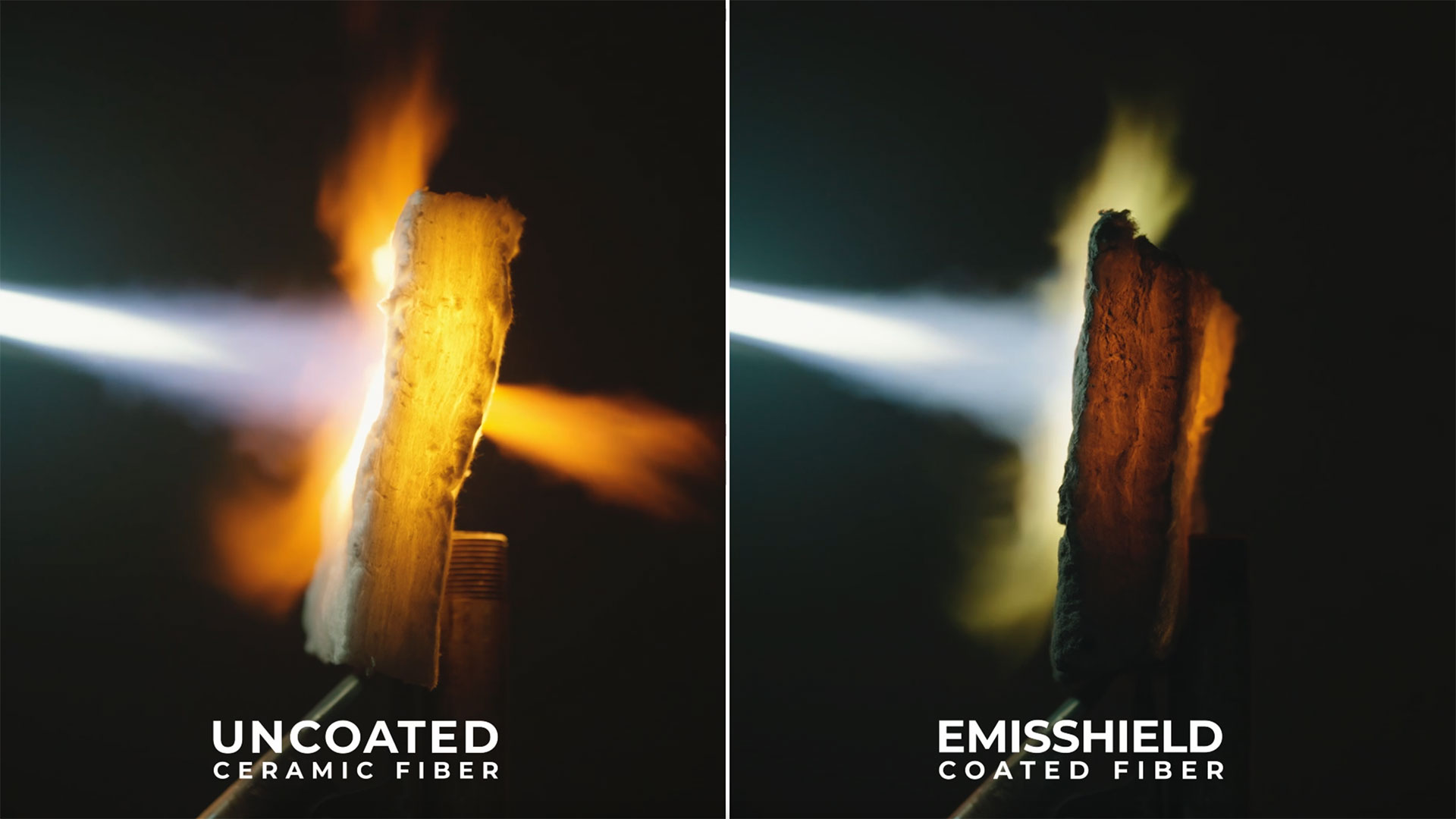
First-generation products were legacy ceramic paints: modest emissivity gains that faded with temperature and time. Second-generation coatings, of which CTEC is the best known, raised emissivity further but still depend on conventional oxide chemistry with limits on adhesion, thermal shock, and recoat interval. Emisshield is the third generation: a nanostructured, water-based, non-hazardous ceramic that performs as a gray body (emissivity essentially constant across temperature and wavelength to 3,100°F), bonds above 5,000 PSI, survives thermal shock from -392°F to 2,732°F in 3 seconds, and holds recoat intervals 3 to 5 times longer than standard high emissivity coatings. Imitations copy the marketing; the documented results on this site belong to the third-generation product.
How does an Emisshield project run?
Every project starts with an engineering questionnaire covering asset design, operating conditions, fuel data, and performance goals. Emisshield engineering selects the formulation for the substrate, atmosphere, and temperature, projects savings from historical performance data on comparable assets, and a certified crew applies the coating during a planned outage. Results are measured against the baseline, which is how every case study on this site was built.
03 · FAQ
Frequently Asked Questions
- Is Emisshield an insulator?
- No. Insulation resists heat flow through a wall. Emisshield changes what happens to radiant energy inside the chamber: it absorbs radiant and convective energy at the hot face and re-radiates it to the cooler product load. The two solve different losses and work together; Emisshield is applied on top of the existing refractory, fiber, or metal surface.
- Will it work on my existing lining?
- Emisshield bonds to metals, refractory brick, castables, insulating firebrick, and ceramic fiber, with adhesion above 5,000 PSI on prepared surfaces. Formulations are matched to each substrate.
- How is it applied?
- Spray, or brush for small areas, at 2 to 4 mils by certified applicators, typically during a planned outage. Most assets are coated in days.
- Is it hazardous?
- No. Emisshield is a water-based, non-hazardous chemistry with no toxic oxides.
Next Step